Global Warning from Scientists: Rocket Launches Threaten the Ozone Layer



The surge in rocket launches is threatening the recovery of the ozone layer. Scientists are issuing striking warnings about the environmental impact of the modern space industry. Here are the details:
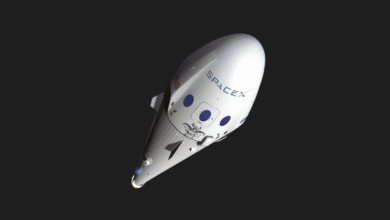
The space industry is growing at an unprecedented pace in recent years. As SpaceX, Blue Origin, and other private companies make space flights increasingly routine, the sky is becoming a center not only for exploration but also for environmental concerns. According to scientists, every rocket launch leaves an invisible trace in the atmosphere.
The New Cost of the Space Race: Invisible Damage to the Atmosphere

In the 1980s, ozone holes caused by chlorofluorocarbons (CFCs) created a worldwide environmental crisis. The 1987 Montreal Protocol, signed at the end of this period, almost completely halted the production of harmful chemicals and initiated a slow recovery process in the atmosphere. However, new research from ETH Zurich and the University of Canterbury suggests that this recovery may be jeopardized again in the modern space age.
The team of atmospheric scientist Sandro Vattioni from ETH Zurich found that while the current impact remains limited, the ozone is still about 2% thinner compared to the pre-CFC era. These data show that the progress made by the Montreal Protocol is incomplete and is even under new threat.
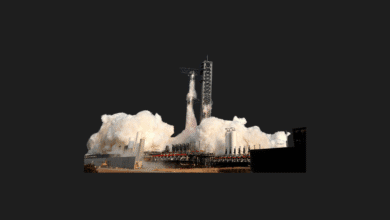
Exhaust gases, including chlorine, metal particles, and carbon soot, released during rocket launches reach the upper layers of the stratosphere. These components not only trap heat but also disrupt the balance of the protective layer by breaking down ozone molecules. Scientists emphasize that chlorine, found especially in solid-fuel rocket motors, plays a decisive role in ozone loss.
Another research team led by Laura Revell from the University of Canterbury modeled different future scenarios. In a moderate growth scenario (approximately 884 launches per year), a global ozone layer thinning of 0.17% is predicted by 2030. In the high growth scenario (more than 2,000 launches per year), this loss is estimated to reach 0.29% globally, and 4% over Antarctica.

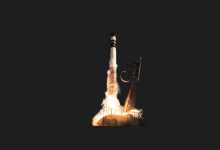
Scientists state that the solution to the problem is not to slow down exploration but to shift towards cleaner propulsion technologies. Cryogenic engines, which run on an oxygen-hydrogen mixture, are among the options with the lowest environmental impact, but due to their complex structure, they are currently used in only a small fraction of launches.
You Might Also Like;